
PVC Foam Board vs High Impact Board: Which Should You Use?
A practical board selection guide for Malaysian signage shops, print businesses and display suppliers comparing PVC foam board and high impact board.
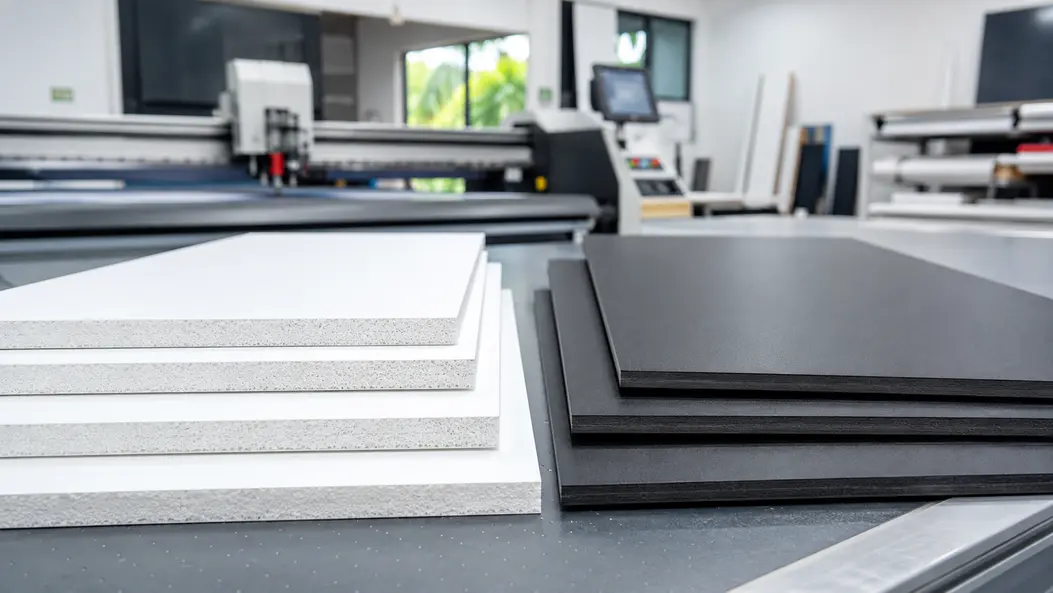
Using the wrong board can turn a simple signage job into rework, waste and lower margin. For Malaysian print shops and signage suppliers, the choice between PVC foam board and high impact board affects cutting, mounting, display quality, durability and job cost.
Quick Summary: PVC foam board is usually better for lightweight signage, mounting, retail displays and thicker board applications. High impact board is better for thinner, tougher and more flexible display work where impact resistance matters. If your signage business handles different board jobs, comparing both materials helps you choose the right option before printing, cutting or installing.
Key Takeaways
- PVC foam board is lightweight, easy to cut and suitable for signage, poster mounting, exhibition panels and display fabrication.
- High impact board is thinner and commonly chosen when the job needs better toughness, flexibility and impact resistance.
- For thicker display boards, PVC foam board is often the more practical choice.
- For thin panels, protective backing, folders, tags or semi-flexible display work, high impact board may be more suitable.
- Always choose based on application, thickness, finishing method, print method, cutting process and installation environment.
Table of Contents
What Is PVC Foam Board?
PVC foam board is a lightweight rigid board material commonly used for signage, advertising displays, poster mounting, exhibition panels, retail displays and fabrication work. It has a smooth surface that is suitable for mounting, cutting and many printing-related applications.
For signage shops, PVC foam board is popular because it is easy to handle, available in various thicknesses and practical for producing clean, lightweight display boards. It is commonly used when the job needs more body and thickness than thin plastic sheets.
Direct Answer for Buyers
Choose PVC foam board when your job needs a lightweight but thicker board for signage, display backing, poster mounting, exhibition panels or general fabrication. It is usually the safer first choice for display jobs that need visible board thickness and easy handling.
What Is High Impact Board?
High impact board is a thinner plastic board material often selected for jobs that need better toughness and resistance to bending or impact compared with standard thin board materials. It is commonly used for display panels, backing sheets, signage inserts, tags and protective board applications.
Unlike PVC foam board, high impact board is usually chosen in thinner gauges. This makes it useful when the job does not need a thick foam structure but still needs a durable board surface.
PVC Foam Board vs High Impact Board: Main Difference
The main difference is structure and application. PVC foam board is a lightweight foam-core style rigid board, while high impact board is a thinner, tougher plastic board. PVC foam board is better when the buyer needs thickness, easy fabrication and display structure. High impact board is better when the buyer needs thin, durable sheet performance.
For example, a retail promotion board, exhibition backing panel or indoor signage board may be better suited to PVC foam board. A thin display insert, folder cover, hanging tag, protective backing or semi-flexible panel may be better suited to high impact board.
Common Applications
Both materials are useful in signage and printing, but they are not always interchangeable. The correct board depends on how the finished item will be printed, cut, mounted, handled and installed.
Common PVC foam board applications
- Indoor signage boards
- Retail display panels
- Poster and photo mounting
- Exhibition and event boards
- Model making and creative fabrication
- Printed display backing
- Cut lettering and simple fabricated shapes
Common high impact board applications
- Thin display panels
- Protective backing sheets
- Tags, cards and inserts
- Folders and promotional display materials
- Retail sign inserts
- Semi-flexible board applications
- Jobs that need better toughness in thin material
Comparison Table
Use this table as a practical starting point before choosing the board for your next signage, printing or fabrication job.
| Factor | PVC Foam Board | High Impact Board | Buyer Decision |
|---|---|---|---|
| Material feel | Lightweight rigid board with thicker body | Thinner and tougher plastic board | Choose based on whether the job needs thickness or thin durability |
| Best for | Signage, mounting, displays and exhibition panels | Thin panels, backing, inserts and impact-resistant jobs | PVC foam board for structure; high impact board for thin toughness |
| Thickness range | Commonly available in thicker board options | Commonly available in thinner sheet options | Match thickness to installation and handling needs |
| Cutting and fabrication | Easy to cut, shape and fabricate for display work | Suitable for thinner sheet cutting and finishing | Test cutting quality before bulk production |
| Visual display use | Good for visible display boards and mounted graphics | Good for thin display components and inserts | Use PVC foam board when the board itself is part of the display structure |
| Typical buyer | Signage shops, print shops, advertisers and display suppliers | Printers, display makers, fabricators and production teams | Keep both options if your shop handles varied board jobs |
How to Choose the Right Board
1. Start with the final application
Do not choose the board only based on price. First ask where the finished item will be used. Is it an indoor display panel, a poster backing, a retail sign insert, a hanging tag, a temporary promotion board or a semi-flexible component?
If the item needs to stand out as a thicker display board, PVC foam board is usually more suitable. If the item needs a thinner sheet that can handle more bending or impact, high impact board may be a better fit.
2. Check the thickness requirement
Thickness affects cost, cutting speed, mounting method, finishing quality and installation. A thicker board may look more premium for display, but it may not be needed for every job. A thinner board may reduce bulk and improve handling, but it may not give the same visual body.
For quotation accuracy, buyers should confirm board thickness before production. A small thickness difference can change material cost, cutting method, packing method and final appearance.
3. Decide whether the board will be printed, mounted or cut
Some jobs involve direct printing, while others involve printing sticker or vinyl first and mounting it onto the board. Some jobs require straight cutting only, while others need contour cutting, router cutting or custom shapes.
Before choosing the board, confirm your production workflow. If you need direct-to-board printing, ask whether your printer and ink system can handle the material. If you need cutting or engraving, test the material on the relevant cutting machine before committing to large production.
4. Consider handling and installation
Signage and display boards often pass through many hands before reaching the final site. They may be stacked, packed, delivered, installed, removed and reused. A board that looks good on the production table may still fail if it is too soft, too brittle, too heavy or unsuitable for the installation method.
For temporary indoor displays, lightweight PVC foam board is often practical. For thin pieces that need better toughness during handling, high impact board can be considered.
5. Test a sample before bulk orders
The best board choice is often confirmed through a simple sample test. Test cutting edges, print adhesion, mounting quality, bending behaviour and surface appearance. This is especially important for repeat jobs, large quantity orders or customer-facing display work.
Recommended ACXUS Options
PVC Foam Board
For signage shops, advertising suppliers and display makers that need lightweight board material for signage, poster mounting, exhibition panels and fabrication work, view ACXUS PVC Foam Board.
High Impact Board
For production teams that need thinner board material with better toughness for display panels, inserts or backing applications, view ACXUS High Impact Board.
Board Series
If you are comparing different board materials for signage and display work, you can also browse the ACXUS Board Series for related board options.
Why Buy from a Local Supplier in Malaysia?
For board materials, local supply is important because buyers often need to confirm stock, thickness, size, delivery timing and suitability for a specific job. A local supplier can help you compare options before you commit to bulk quantity.
ACXUS supports Malaysian signage shops, print businesses, advertising suppliers and fabrication teams with board materials, printing solutions, cutting solutions and related display products. This helps buyers match the material with the actual production workflow instead of choosing based on material name alone.
If your job involves printing, cutting or finishing, speak to ACXUS about your material sample, required size, thickness, application and expected order volume. The right board choice can reduce waste, improve finishing quality and make repeat production easier.
Need Help Choosing Between PVC Foam Board and High Impact Board?
Send ACXUS your application, required board size, thickness, quantity and whether the job involves printing, mounting or cutting. Our team can help you compare the suitable board option for your signage or display project.
FAQ: PVC Foam Board vs High Impact Board
What is the main difference between PVC foam board and high impact board?
PVC foam board is a lightweight rigid board commonly used for signage, mounting and display panels. High impact board is usually a thinner and tougher plastic board used when the job needs better impact resistance or thin sheet durability.
Is PVC foam board suitable for signage?
Yes. PVC foam board is widely used for indoor signage, retail displays, exhibition panels, poster mounting and general advertising display work. It is practical when the job needs a lightweight board with visible thickness.
When should I choose high impact board?
Choose high impact board when the job needs a thinner board with better toughness, flexibility or impact resistance. It is useful for display inserts, backing sheets, tags, folders and semi-flexible panel applications.
Can PVC foam board be printed on directly?
PVC foam board can be used for printing-related applications, but the correct method depends on your printer, ink type and surface preparation. Some businesses print directly using suitable UV printing equipment, while others print sticker first and mount it onto the board.
Which board is better for poster mounting?
PVC foam board is usually more suitable for poster mounting because it provides a lightweight backing with better board thickness. It is commonly used for display boards, photo mounting and indoor promotional signage.
Which board is better for thin display panels?
High impact board may be better for thin display panels, inserts or backing pieces that need toughness without thick board structure. It depends on the final use, cutting method and how the panel will be handled.
Should signage shops keep both PVC foam board and high impact board?
Many signage and printing businesses can benefit from keeping both options because different jobs need different board properties. PVC foam board covers thicker display and mounting work, while high impact board covers thinner and tougher sheet applications.