
3D Box-Up Letter Bending Machine: Malaysia Buyer Checklist
A practical checklist for Malaysian sign shops deciding whether a letter-bending machine fits their materials, designs and production workflow.
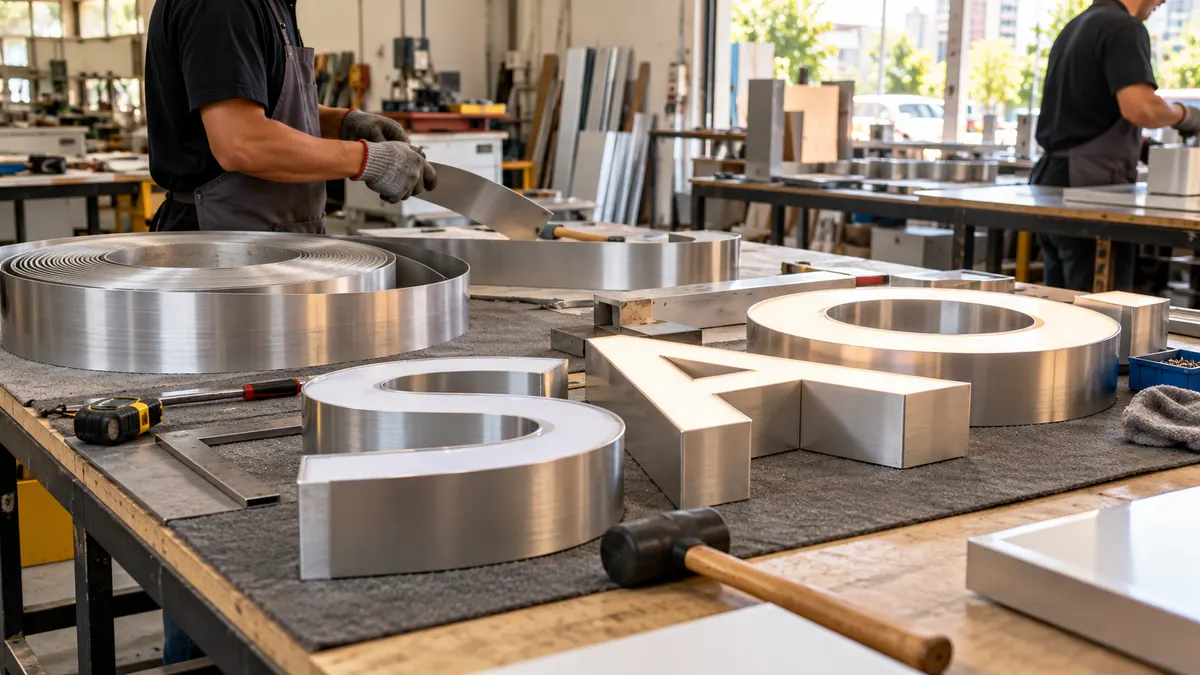
A fast-looking machine is a poor investment if it cannot form the returns your signs actually need. Before comparing a 3D box-up letter bending machine, collect your real letter files, aluminium samples and finished-sign requirements. This guide helps a Malaysian sign shop ask the right questions about material compatibility, bend quality, workspace and support. Start with the ACXUS 3D box-up bending machine range, then test the short-listed setup against your own work rather than a generic demo.
A bending machine forms the side returns of a raised letter; it does not, on its own, print a face, cut every face material, assemble the sign or install it. Treat it as one station in a wider sign-making process. ACXUS lists the AL100 flat-aluminium bending machine and a G130 bending machine, but the published G130 product page does not provide a detailed specification. Confirm that model’s capabilities directly before planning around it.
Quick Summary: Choose a 3D box-up letter bending machine by the returns you make, not by a headline speed claim. Check the exact aluminium profile and dimensions, smallest curves, file and tooling workflow, workshop utilities and local support. Run a sample with your own design and stock, then check the formed return against its face and assembly process before requesting a final machine quotation.
Key Takeaways
- Bring actual letter designs and material samples to a demonstration; a showroom sample may not represent your hardest job.
- Confirm supported material type, thickness and strip width for the exact machine, rather than assuming all metal profiles are interchangeable.
- Inspect small curves, corners, feed marks and fit with the acrylic or metal face as well as the appearance of a large simple letter.
- Plan for file preparation, face cutting, joining and finishing around the bending station; the machine does not replace those steps.
- Ask about installation, training, consumables and fault support before comparing quotations.
Table of Contents
- What does a box-up letter bending machine actually make?
- Which material and profile should your machine accept?
- Which letter sizes and bends should you test?
- How should you compare the ACXUS AL100 and G130?
- What workshop workflow and utilities must you plan for?
- What should you ask during a demo and support discussion?
- How can you decide whether the machine fits your business?
- FAQ: Box-up letter bending machines in Malaysia
What does a box-up letter bending machine actually make?
It forms the side wall, often called a return, of a raised sign letter from compatible strip material. The face, back, lighting and final assembly are separate decisions. A workshop making box-up shop signs or three-dimensional logos should first map where bent returns enter its process, rather than treating the machine as a complete sign-production line.
Start with a finished sample of the type of sign your customers buy. Note whether the face is cut from acrylic or another material, how it joins to the return, and whether the letter will be illuminated. If the job involves shallow curves, tight internal corners or a particular side depth, these details affect the machine discussion more than the size of the finished sign alone.
A shop may already cut faces in-house, buy cut faces from another fabricator, or outsource final assembly. All three arrangements can work, but their bottlenecks differ. Ask which step is causing delays today: preparing the drawing, bending the side, fitting the face, joining components or finishing the sign. A bending machine addresses only part of that chain, so its value depends on the jobs it helps you keep moving.
Prepare examples of a straightforward letter, a rounded letter and a more awkward shape. Bringing an actual customer design to a demonstration lets you assess repeatability and fit, not just whether a sample looks attractive on a table.
Which material and profile should your machine accept?
Match the machine to the exact strip your shop intends to use. Material name alone is not enough: confirm type, thickness, width and profile on the specific model before buying. A machine described for flat aluminium should not be assumed to bend stainless steel, pre-formed channel profiles or every coated strip.
The published ACXUS AL100 product page specifies 0.6 mm and 0.8 mm flat aluminium and a material-width range of 10–100 mm. Those are specifications for the AL100 only, not a promise about G130 or every variation of box-up lettering. Bring the actual coil or a representative offcut and ask ACXUS to verify the stock, surface finish and feeding path before relying on any specification.
Compare the return depth in your common letters with the strip width you plan to buy. Check whether your stock arrives straight, pre-coated, embossed or in a profile that requires its own handling. If a quote assumes a different grade or format, the sample demonstration may not tell you how your daily jobs will behave. Record the material used in each trial so that the result can be repeated later.
Inspect surface marks after feeding and bending. A visible mark may be acceptable on a concealed return but not on an exposed premium sign; the answer depends on your finishing method and the customer’s visual standard. Also ask how a change in coil thickness or side depth is handled, rather than assuming a setting carries across different stock.
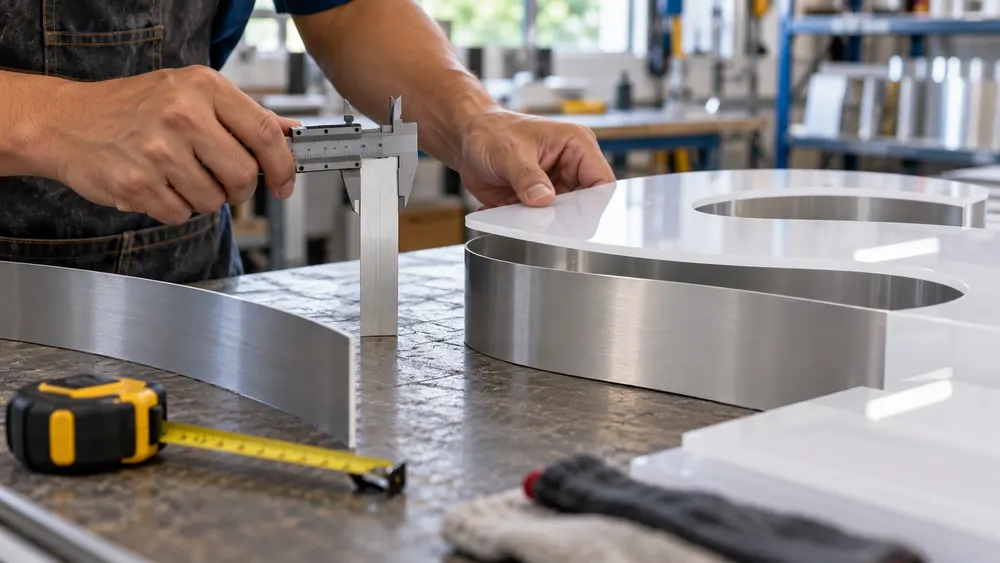
Don’t Skip the Sample Test
Send the supplier a real production file and the stock you expect to use. Agree which dimensions and surface qualities you will inspect before the demo. A sample made with another workshop’s strip or a simpler letter is useful to understand the process, but it is not a compatibility test for your order.
Which letter sizes and bends should you test?
Test the smallest, tightest and most frequently repeated letters you actually sell. A large open shape may bend cleanly while a narrow internal curve or short return exposes setup and fit problems. Compare the formed piece against the face, not only against an image of the design file.
Prepare a sample set with a straight segment, a sharp change of direction and a rounded section. Include a letter with a small internal opening if your jobs use one. Tell the demonstrator which dimensions are visually critical and how the returns will be joined. The purpose is not to obtain a universal tolerance claim; it is to see whether your real workflow can produce an acceptable sign.
For each trial, record the input file, material, setup changes and result. Check that a second piece matches the first well enough for your assembly process. Inspect corners, curves and surfaces under the lighting in which the finished sign will be viewed. If a joint needs hand correction, note how much finishing is required and whether it is normal for that design.
Ask what happens when a customer’s artwork arrives with poorly joined paths or very small details. File preparation can matter as much as the hardware. Clarify who cleans up the artwork, how the machine software handles the file, and whether the operator can review the bend sequence before using material. Do not assume that an exported drawing is production-ready without a sample.
How should you compare the ACXUS AL100 and G130?
Compare the published AL100 specifications with a confirmed G130 quotation, not with assumptions. ACXUS currently shows both models in its bending-machine category, but the G130 product page has no detailed public specification. Ask for a model-specific sheet and test the same job on any model you are seriously considering.
| What to Compare | ACXUS AL100 | ACXUS G130 | Buyer Fit |
|---|---|---|---|
| Listed material | 0.6 mm / 0.8 mm flat aluminium | Confirm the exact supported stock with ACXUS | Match your actual coil, profile and finish. |
| Listed strip width | 10–100 mm | Request a model-specific specification | Compare with your normal return depth. |
| Published setup details | 220 V / 50 Hz / 1.0 kW stated on product page; verify site and air requirements | Confirm electrical, air and space needs | Check workshop readiness before ordering. |
| Real letter demo | Request a test with your file and stock | Request the same test | Inspect fit, corners, repeatability and finishing. |

The AL100 listing also describes its feeding, slotting and bending systems. Those names tell you what to ask about, not the quality you will achieve on your stock. For G130, avoid inferring capabilities from the model name or product picture. The useful comparison is a documented feature check plus an apples-to-apples demonstration with the same inputs.
If either machine suits the sample, compare the whole acquisition: required accessories, software, training, installation and maintenance arrangements. Clarify what comes in the quotation and what is supplied separately. A cheaper or faster-sounding machine on paper is not necessarily the better fit if it moves an unplanned finishing step onto your team.
What workshop workflow and utilities must you plan for?
Plan a station for material handling, formed returns and the next assembly step, not just floor space for the machine body. Verify electrical supply and any compressed-air requirement for the quoted model before committing. Keep operator access and a safe path for incoming coils and completed pieces in the layout.
The AL100 page publishes an electrical rating, but your electrician or installer should confirm the supply at your site and the requirements of the delivered configuration. The page’s air-supply notation should be clarified with ACXUS rather than interpreted from an ambiguous unit. For G130, ask for the installation sheet, not a copied AL100 figure. Confirm who supplies accessories and how the setup will be commissioned.
Map the path from artwork to finished sign. A drawing must be prepared, the chosen strip fed and formed, the face fitted, and the parts joined and finished. If a CNC router or laser already produces faces, ask how their files and dimensions will be checked against the bent return. If face work is outsourced, allow for handover and tolerances between suppliers. The best machine demonstration includes the piece that must fit next.
Estimate capacity from your own job history. List recent orders, count their letters and note how much operator time the return-forming step currently consumes. Then measure the whole demo workflow: file preparation, setup, running, adjustments and inspection. Avoid translating a supplier’s headline speed directly into your weekly output; complex characters, stock changes and other production steps can change the result.
What should you ask during a demo and support discussion?
Ask ACXUS to run your real file and stock, then explain training, maintenance and fault support for the quoted model. A relevant demo should show material loading, file preparation, a repeated letter and inspection after bending. Keep a written list of what was demonstrated versus what still needs confirmation.
Before the session, send the design, target material, strip dimensions and a photograph or sample of the finished letter style. At the demo, watch the setup as well as the output. Ask how an operator handles a misfeed, a failed bend or a new stock profile. These questions reveal the normal work around the machine without requiring exaggerated productivity promises.
After the run, examine two matching pieces, check critical curves and place a face against the return. Photograph the results with the material and settings recorded. Ask what training is included for the operators who will use the machine, and how a technician or replacement part is requested if production stops. Record the answers in the quotation rather than relying on a general sales conversation.
For a shop outside Selangor, clarify installation location, scheduling and any travel arrangement before setting a production date. ACXUS is based in Semenyih, but a specific response time or nationwide service level should not be assumed without a written commitment. Ask for the exact support arrangement that applies to your order and address.
How can you decide whether the machine fits your business?
Choose the machine only after its tested output fits your actual sign construction and its quoted support fits your operation. A useful decision sheet records must-have materials and letter sizes, sample results, workflow changes, utilities, training and unanswered questions. Mark any unverified item for follow-up instead of treating it as a feature.
Separate the work you do frequently from jobs you might take someday. If most current orders use flat aluminium returns in the dimensions listed for AL100, that model warrants a direct sample test. If you regularly need a different material or profile, ask ACXUS which model supports it and request written confirmation. Do not buy a machine for an assumed future stainless-steel service when the quoted model has only been verified for aluminium.
Think through the entire sign, not just its side wall. Where will the face come from? Who checks the fit? How are lighting and assembly handled? What happens when a customer changes the artwork late? These questions protect the shop from improving one station while creating a bottleneck elsewhere.
Finally, request a quotation that identifies the exact model, material assumptions, included accessories, installation scope, training and support terms. Attach your sample-test notes. This gives you a practical basis for comparing options and for briefing your team after delivery, without guessing at prices or performance that may change.
Will a bending machine fit the letters you make?
Send ACXUS your letter file or sample, flat-aluminium strip details, intended return depth, usual job quantity and workshop location. Ask for a model-specific compatibility check and a demonstration using your material before requesting a final quotation.
FAQ: Box-up letter bending machines in Malaysia
What is a 3D box-up letter bending machine used for?
It forms compatible strip material into the side returns of raised sign letters. The face, backing, lighting, joining and installation remain separate tasks. For a useful purchase decision, bring a completed-sign example and ask the supplier to show how the formed return fits your face and assembly method.
Can the ACXUS AL100 bend stainless steel?
The published ACXUS AL100 specification lists flat aluminium in 0.6 mm and 0.8 mm thicknesses; it does not establish stainless-steel compatibility. Do not assume another metal will work because it has a similar width. Tell ACXUS the exact material and profile you need, and obtain model-specific confirmation before buying.
What aluminium width can the AL100 handle?
ACXUS lists a 10–100 mm material-width range for the AL100, along with specific flat-aluminium thicknesses. Width alone does not prove that every profile, coating or finished return will suit your job. Verify the delivered setup using the actual stock and design that your sign shop intends to use.
Should I choose AL100 or G130 for my sign shop?
Start with your material, return depth and most difficult letter, then compare model-specific specifications and a sample run. AL100 has published flat-aluminium details, while the public G130 page does not provide a detailed specification. Request the G130 information directly from ACXUS and test comparable pieces before making the choice.
Does a letter-bending machine also cut the acrylic face?
Do not assume it does. This guide treats return forming and face cutting as separate production steps. Ask ACXUS how the quoted setup fits the way your workshop cuts or sources faces, then inspect a bent sample against the matching face. Other cutting equipment may be needed for your complete sign workflow.
What should I bring to a bending-machine demonstration?
Bring a real production drawing, a sample of your intended strip and a face or finished-letter example if possible. Include a small curve and a difficult corner, not just a large simple letter. Record the material, setup and results so you can judge repeatability and compare them with your workshop’s quality standard.
What support questions should I ask before ordering?
Ask who installs the specific machine, what operator training covers, which accessories are included and how faults or replacement parts are handled. Confirm the electrical and air requirements for your address in writing. ACXUS is based in Semenyih, but do not assume a particular response time without a model-specific agreement.
Related ACXUS Links
3D box-up letters Bending machines Sign-making equipment